
 CALL AN EXPERT! +86-131-3073-8426


Cleanroom Equipment Trends 2025: AI, Energy Efficiency, and Modular Design
The cleanroom industry is evolving faster than ever. Facility managers and procurement teams now face growing pressure to balance contamination control with energy savings, flexibility, and digital connectivity. In 2025, six major trends are reshaping how organizations select, install, and operate cleanroom equipment. Whether you manage a pharmaceutical plant, a semiconductor fab, or a biotech lab, understanding these shifts will help you make smarter investment decisions.
Table of Contents
ToggleTrend #1: AI-Powered Monitoring for FFU Clean Room Systems
Artificial intelligence is transforming how teams manage air filtration. Modern FFU clean room setups now integrate AI-driven sensors that monitor airflow velocity, filter pressure drop, and particle counts in real time. These systems predict filter replacement schedules, detect anomalies before they cause contamination events, and automatically adjust fan speeds based on occupancy or production cycles.
This proactive approach reduces unplanned downtime by up to 30% and extends HEPA filter life significantly. Facility managers no longer rely on fixed maintenance calendars—they act on live data instead.
Trend #2: Energy-Efficient EC Motor FFUs Cutting Costs by 50%+
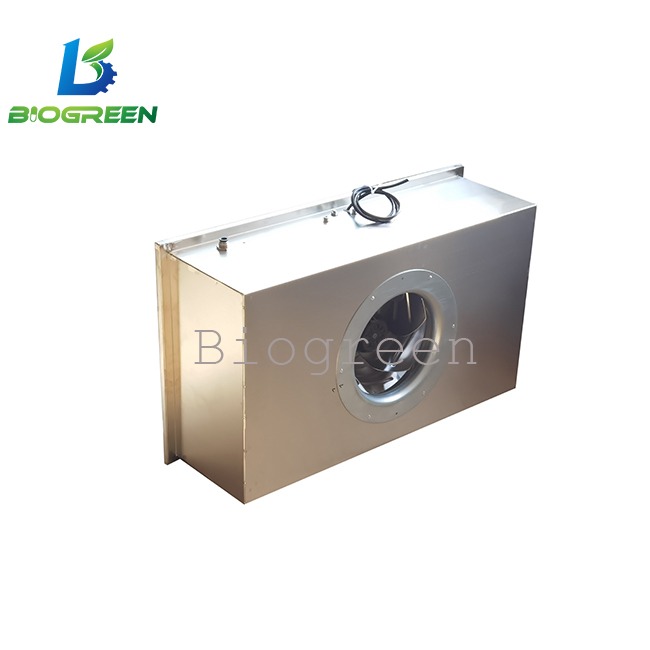
Energy consumption remains one of the largest operating expenses for any cleanroom. Electronically commutated (EC) motor FFUs now deliver the same airflow performance as traditional AC motor units while consuming over 50% less electricity. These motors also run quieter, generate less heat, and offer variable speed control through building management systems.
For large-scale facilities running hundreds of FFU units, this single upgrade translates into tens of thousands of dollars in annual savings.
Trend #3: Modular and Portable Cleanroom Equipment for Flexible Manufacturing
Manufacturing demands shift rapidly. Modular cleanroom equipment answers this challenge by allowing teams to reconfigure layouts, expand capacity, or relocate entire cleanroom environments without costly construction. Prefabricated wall panels, plug-and-play FFU ceiling grids, and mobile softwall enclosures give organizations the agility they need to respond to new product lines or regulatory changes within weeks rather than months.
How Smart Connectivity Is Upgrading Pass Box Clean Room and Air Shower Operations
Trend #4: Smart Pass Boxes with IoT-Enabled Interlocking
The pass box clean room interface has always served as a critical contamination barrier. In 2025, smart pass boxes go further by incorporating IoT-enabled interlocking mechanisms, UV-C sterilization cycles, and automated data logging. Every transfer event—including door open/close times, sterilization status, and user identification—gets recorded digitally, simplifying audit trails and regulatory compliance.

Trend #5: Touchless Clean Room Air Shower Systems
Post-pandemic facility design prioritizes minimal surface contact. The latest clean room air shower units feature touchless activation via motion sensors or proximity cards. Automatic door sequencing, programmable air cycle durations, and HEPA-filtered high-velocity jets remove particulates from personnel without requiring anyone to press buttons or pull handles. This approach improves both decontamination effectiveness and user compliance rates.

Trend #6: Sustainability-Driven HEPA Filter Recycling Programs
Sustainability is no longer optional. Progressive facilities now participate in HEPA filter recycling programs that recover aluminum frames, separate media materials, and reduce landfill waste. Some programs reclaim over 85% of filter components. Choosing cleanroom equipment designed with recyclable materials from the start makes these programs far more effective.
Impact on Procurement Decisions for Facility Managers
These six trends directly influence how facility managers evaluate and purchase cleanroom equipment in 2025:
- Total cost of ownershipmatters more than upfront price. EC motor FFUs cost more initially but pay for themselves within 18 months.
- Data integration capabilityis now a baseline requirement. Equipment that connects to centralized monitoring platforms wins over standalone units.
- Scalability and modularityreduce long-term capital risk. Managers favor suppliers offering configurable systems over fixed installations.
- Regulatory readinessdrives demand for smart pass box clean room solutions and touchless clean room air shower designs that automate documentation.

Conclusion – Future-Proof Your Cleanroom Investment Starting Now
The cleanroom equipment landscape in 2025 rewards organizations that embrace intelligence, efficiency, and flexibility. From AI-optimized FFU clean room systems to touchless clean room air shower designs and IoT-connected pass box clean room solutions, every trend points toward smarter operations and lower lifecycle costs. Start evaluating these innovations today, and you position your facility to meet tomorrow’s contamination control challenges with confidence.
We'll call you
In order to serve you better, if you could kindly send an e-mail to nick@biogreenness.com for questions and details about your theoretical and special architectural plans, projects, and product specifications, your request will be responded to as soon as possible.
We'll call you
In order to serve you better, if you could kindly send an e-mail to nick@biogreenness.com for questions and details.


