
 CALL AN EXPERT! +86-131-3073-8426


How to Choose Cleanroom Chairs for Different Cleanroom Classes
Cleanroom chairs aren’t just for comfort—they’re critical for preventing contamination, as ordinary chairs shed fibers, generate static, or trap dust. The right chair depends on your cleanroom class (e.g., Class 100, Class 1000, Class 10,000), which dictates how strict particle and static control must be. A chair that works in a Class 10,000 cleanroom might be too dusty for a Class 100 zone, putting sensitive processes at risk. Let’s break down how to choose chairs for the most common cleanroom classes.
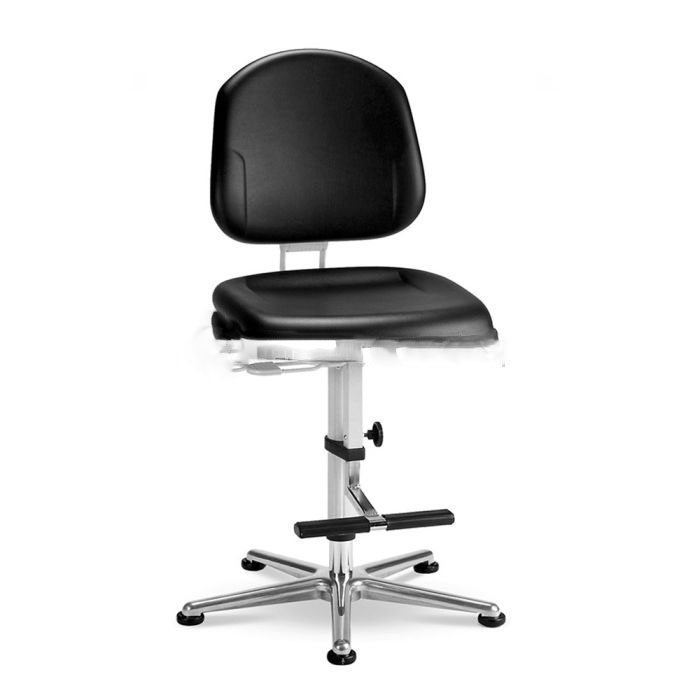
Table of Contents
ToggleChoose Low-Linting, Seamless Cleanroom Chairs for Class 100 Cleanrooms
Class 100 cleanrooms (among the strictest) allow only 100 particles (0.5 microns or larger) per cubic foot of air—so every piece of furniture must be ultra-low-linting. Cleanroom chairs for this class are made from seamless, non-shedding materials like vinyl or polyurethane (PU), with no stitching, buttons, or fabric that can release fibers. They also have smooth, one-piece seats and backs—no crevices where dust can hide.
Static control is another must: Class 100 cleanrooms (often used for semiconductor or microchip manufacturing) can’t have static, which attracts dust and damages components. These chairs have anti-static casters and seat materials that dissipate static charge (measured at 10^6–10^9 ohms). For example, a semiconductor worker sitting on a non-anti-static chair could generate static that ruins a microchip— a Class 100-approved chair eliminates this risk. These chairs are also easy to clean with sterile disinfectants, ensuring no residue builds up.

Select Anti-Static, Easy-to-Clean Cleanroom Chairs for Class 1000 Cleanrooms
Class 1000 cleanrooms (used for pharmaceutical manufacturing or biotech research) allow 1,000 particles per cubic foot—less strict than Class 100 but still requiring careful control. Cleanroom chairs here can have minimal stitching (as long as it’s sealed to prevent shedding) and are made from low-linting materials like PU or reinforced vinyl. They still need anti-static properties, but the static dissipation range can be slightly wider (10^5–10^10 ohms) than Class 100 chairs.
Easy cleaning is key for Class 1000 cleanrooms, where cross-contamination between batches is a risk. Chairs should have smooth surfaces that wipe clean with a single pass of a sterile cloth and disinfectant. Many models have adjustable heights (to fit workbenches) and swivel bases (for easy movement) but no hidden parts that trap dust. For example, a biotech researcher using a chair with a fabric seat would risk fiber contamination of cell cultures— a Class 1000 chair’s smooth vinyl seat avoids this.

Opt for Durable, Low-Dust Cleanroom Chairs for Class 10,000 Cleanrooms
Class 10,000 cleanrooms (used for general electronics assembly or food processing cleanrooms) allow 10,000 particles per cubic foot— the most flexible of the three classes. Cleanroom chairs here can be made from durable, low-linting materials like polypropylene or reinforced PU. They don’t need the same seamless design as Class 100/1000 chairs, but they should have minimal crevices and no loose parts that shed.
Static control is still important (especially for electronics), but these chairs can use basic anti-static casters or seat coatings. Durability is another priority—Class 10,000 cleanrooms often have high foot traffic, so chairs need strong frames and casters that don’t break or shed rubber. For example, an electronics assembly worker using a flimsy chair might have a caster break, leaving rubber particles in the cleanroom— a durable Class 10,000 chair avoids this. These chairs are also affordable, making them a practical choice for teams with multiple workstations.


