
 CALL AN EXPERT! +86-131-3073-8426


How to ChooseCleanroom Coveralls for Your Facility’s Level
Cleanrooms operate under strict cleanliness standards, and the right cleanroom coveralls are critical to maintaining these levels. Different facilities, from Class 100 to Class 10000, have varying limits on allowable particles, and the coveralls must match these requirements to prevent contamination. Choosing incorrectly can compromise processes, damage products, or even violate industry regulations. To select the best cleanroom coveralls, you need to understand how cleanliness classes influence design and which features matter most for your specific environment.

Table of Contents
ToggleCleanroom Coveralls Must Align with Cleanliness Classes Like Class 100 and Class 10000
Cleanliness classes, such as Class 100 and Class 10000, define the maximum number of particles (per cubic foot) allowed in the air—smaller numbers mean stricter standards. Class 100 facilities, common in semiconductor or pharmaceutical manufacturing, permit only 100 particles of 0.5 microns or larger, requiring the most stringent protection. For these, cleanroom coveralls must be highly effective at trapping particles shed by the body, such as skin cells or hair.
Class 10000 facilities, used in industries like medical device assembly, allow up to 10,000 particles of the same size, so their cleanroom coveralls can be slightly less restrictive but still need reliable barrier properties. For example, Class 100 coveralls often use tighter weaves and specialized laminates to minimize particle release, while Class 10000 options might use lighter materials that still block larger contaminants. Mismatching coveralls to the class—like using a Class 10000 design in a Class 100 room—risks introducing excess particles, undermining the cleanroom’s purpose.

Fabric Dust Resistance is a Key Detail for Effective Cleanroom Coveralls
The fabric of cleanroom coveralls directly impacts their ability to prevent contamination. In higher classes (like Class 100), fabrics must be low-linting and non-shedding to avoid releasing fibers into the air. Synthetic materials, such as tightly woven polypropylene or polyester blends, are preferred because they trap particles rather than generating them. Natural fibers like cotton, on the other hand, shed easily and are unsuitable for strict cleanrooms.
For lower classes (like Class 10000), while fabric still needs to resist dust, slight variations in weave density are acceptable. However, even here, the fabric should withstand repeated laundering without breaking down, as worn fibers can become a source of contamination. Testing fabric samples for lint release before purchasing can help ensure the cleanroom coveralls meet your facility’s needs, regardless of the class.
Seam Sealing and Hoods Enhance the Protection of Cleanroom Coverallsl
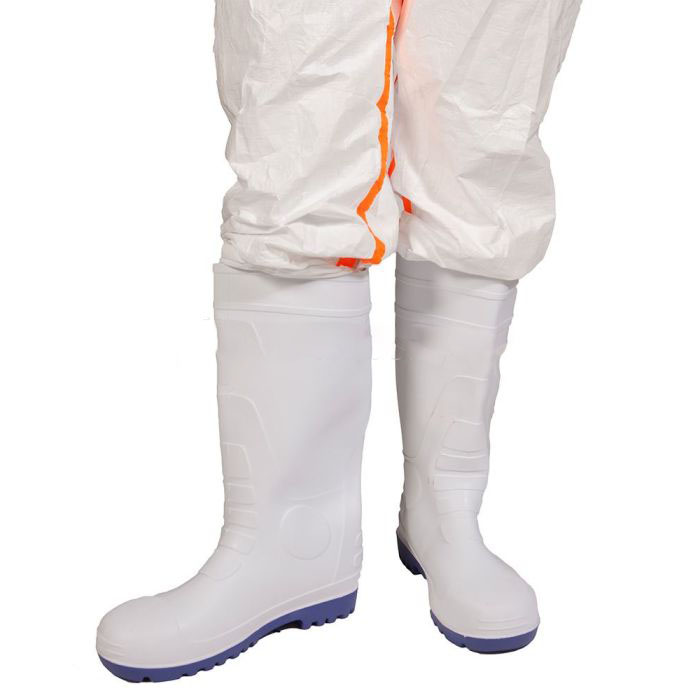
Seams are potential weak points in cleanroom coveralls, as gaps can allow particles to escape or enter. In Class 100 environments, sealed or welded seams are essential—these prevent particles from slipping through stitched edges. Stitched seams, even with tight stitching, may not be sufficient here because thread holes can act as particle pathways.
Hoods are another critical feature, especially in higher cleanliness classes. A well-fitted hood covers all hair and scalp, which are major sources of contamination. For Class 100 facilities, hoods should integrate seamlessly with the coverall, with elastic or adjustable edges to create a tight seal around the face (paired with masks or respirators). In Class 10000 settings, hoods are still important but may have slightly more flexibility in fit, as long as they fully enclose the head. Choosing cleanroom coveralls with these details ensures no particle sources go unprotected.


