
 CALL AN EXPERT! +86-131-3073-8426


How to Select a Modular Cleanroom Manufacturer in Germany
Choosing a modular cleanroom manufacturer Germany project teams can rely on is not mainly a panel-price decision. The better supplier can translate cleanliness class, HVAC, documentation, qualification, and site conditions into a buildable package before fabrication starts.
For a modular cleanroom Germany project, compare engineering depth, standards knowledge, enclosure quality, documentation, and installation responsibility—not square-meter price alone.
Table of Contents
ToggleWhat Standards Should a Cleanroom Manufacturer Understand for German Projects?
ISO 14644 and VDI 2083 Should Be Considered During Cleanroom Engineering
For ISO 14644 Germany projects, ISO 14644-1:2015 defines air-cleanliness classification by airborne particle concentration. ISO 14644-4:2022 covers requirements through design, construction, and start-up; Parts 2 and 3 address monitoring and testing, while the current ISO 14644-5:2025 covers cleanroom operations.
Germany also uses the VDI 2083 cleanroom-technology series. VDI 2083 Part 4.1 addresses planning, construction, and start-up, while Part 3 covers cleanroom metrology used during handover and qualification.
In our experience, the tender should freeze the ISO class, occupancy state, pressure concept, temperature/humidity range, and acceptance tests before pricing. On a 300–1,000 m² project, allowing roughly two to four weeks for coordinated shop-drawing review can prevent costly field changes later.
Pharmaceutical Projects May Also Need to Address EU GMP Annex 1
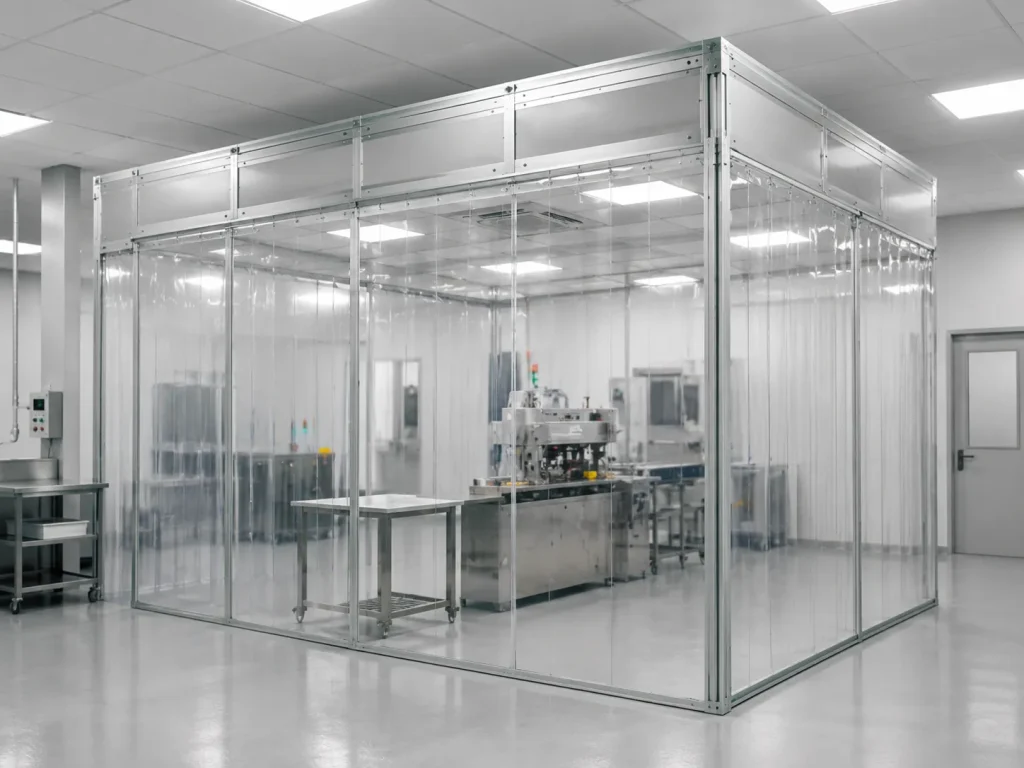
A pharmaceutical cleanroom Germany project for sterile or aseptic manufacturing may also need EU GMP Annex 1, which is fully applicable for sterile medicinal-product manufacturing. Annex 1 also references the ISO 14644 series for cleanroom qualification.
Annex 1 gives a minimum 10 Pa pressure difference between adjacent rooms of different grades as a guidance value. Qualification can include final-filter integrity, airflow volume and velocity, pressure difference, airflow visualization, microbial testing, temperature, and relative humidity.
From the projects we’ve completed, problems often appear at interfaces between doors, return air, process equipment, and pressure cascades rather than in the wall panels themselves. A pharmaceutical cleanroom Germany design should therefore be reviewed as one airflow and contamination-control system.
Local Project Requirements Must Be Defined Before Equipment and Panels Are Manufactured
German projects do not all use one identical fire, electrical, utility, or building-interface specification. DIN EN 13501-1 covers reaction-to-fire classification of construction products, but the required classification still depends on the building, intended use, and project approval conditions.
Before cleanroom construction Germany fabrication starts, confirm utility points, panel penetrations, AHU and duct interfaces, electrical loads, ceiling loads, access routes, fire interfaces, and installation responsibilities.
For overseas supply, the contract should also state who handles unloading, lifting, duct connections, electrical termination, commissioning, testing, and final handover.
How to Compare a Modular Cleanroom Manufacturer Germany Project
Review the Supplier’s Engineering Package Before Comparing Prices
A serious cleanroom supplier Germany proposal should include layouts, room data, airflow quantities, pressure relationships, HVAC concepts, panel drawings, door schedules, equipment schedules, and load information.
In our experience, a medium-sized project can require 10–20 coordinated drawing or schedule types before production approval. If one proposal is 10–15% cheaper, first check whether controls, factory acceptance testing (FAT), commissioning, installation supervision, and qualification support are included.
Check | Evidence to Request |
Engineering | Layout, airflow, pressure, HVAC, loads |
Enclosure | Panel joints, seals, doors, penetrations |
Documentation | Datasheets, certificates, FAT records, manuals |
Site work | Installation, commissioning, testing, coordination |
Evaluate Panel Quality, Airtightness, HVAC Integration and Maintainability
For modular cleanroom systems Germany, inspect flush joints, sealant details, cleanable finishes, door hardware, ceiling access, service penetrations, and integration of HEPA terminals, lights, sensors, sprinklers, and return-air paths.
VDI 2083 includes dedicated guidance relating to cleanroom airtightness and material suitability.
Modular systems can be easier to modify or expand than fixed partitions, but they are not automatically the better solution. Poor dimensional coordination can create leakage paths, difficult maintenance access, and field cutting, while overseas sourcing adds transport, customs, and local installer coordination.

Check Documentation, Qualification Support and Local Installation Capability
Before choosing a cleanroom supplier Germany, request technical datasheets, approved drawings, material certificates, factory inspection records, FAT documents, installation manuals, testing protocols, spare-parts information, and IQ/OQ support where required.
A cleanroom construction Germany contract should also identify responsibility for duct connections, electrical termination, commissioning, balancing, particle testing, and final qualification.
From the projects we’ve completed, assigning one named site supervisor or qualified local installation partner usually reduces interface disputes compared with dividing responsibility among several contractors.
Germany Modular Cleanroom Manufacturer FAQ
Does a German Cleanroom Project Have to Use a German Manufacturer?
No. Manufacturer nationality is not the deciding technical criterion.
An overseas manufacturer can be suitable if the cleanroom meets the project’s technical requirements, required materials and fire performance are documented, qualification support is available, and responsibility for German site installation and local approvals is clearly defined.
What Documents Should an Overseas Modular Cleanroom Supplier Provide for a German Project?
For modular cleanroom systems Germany, request approved-for-production drawings, panel and door datasheets, HVAC schedules, electrical interface information, material certificates, FAT records, packing lists, installation instructions, testing procedures, and qualification-support documents.
A cleanroom manufacturer Germany procurement team evaluates should also provide a document register showing what will be issued before production, shipment, FAT, installation, and handover.
Should a Pharmaceutical Cleanroom in Germany Follow Both ISO 14644 and EU GMP Annex 1?
For sterile medicinal-product manufacturing, the frameworks address related but different requirements.
ISO 14644 Germany covers subjects such as classification, design, monitoring, and testing, while EU GMP Annex 1 adds GMP requirements for sterile manufacturing. The quality and regulatory team should define the applicable requirements based on the actual manufacturing process rather than applying the same specification to every cleanroom.
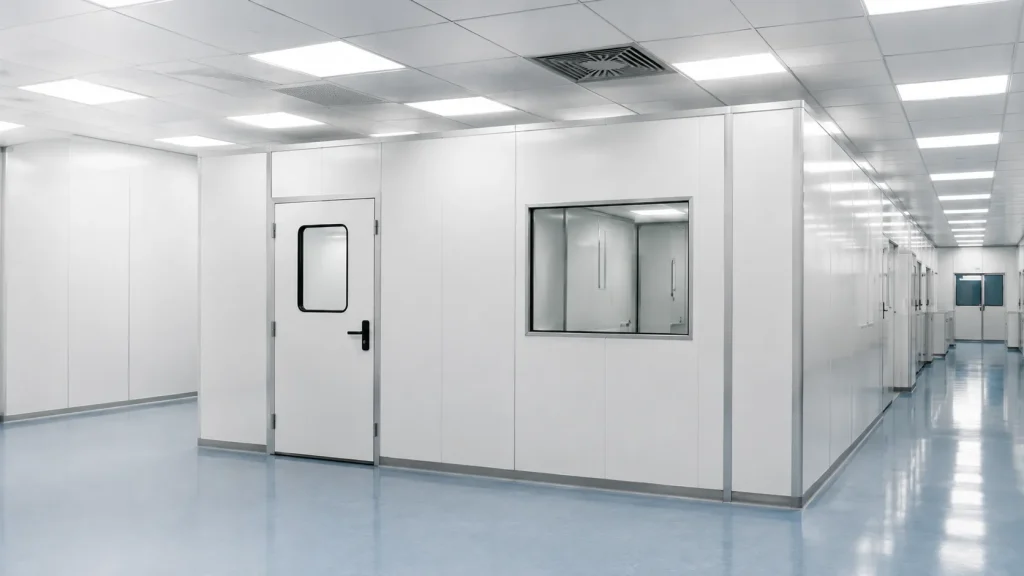
Selecting the right modular cleanroom manufacturer Germany partner should start with engineering responsibility rather than equipment price. For a modular cleanroom Germany project, the supplier should demonstrate how standards, airflow, materials, documentation, qualification, testing, and local installation fit together before manufacturing begins.
We'll call you
In order to serve you better, if you could kindly send an e-mail to nick@biogreenness.com for questions and details about your theoretical and special architectural plans, projects, and product specifications, your request will be responded to as soon as possible.
We'll call you
In order to serve you better, if you could kindly send an e-mail to nick@biogreenness.com for questions and details.


